

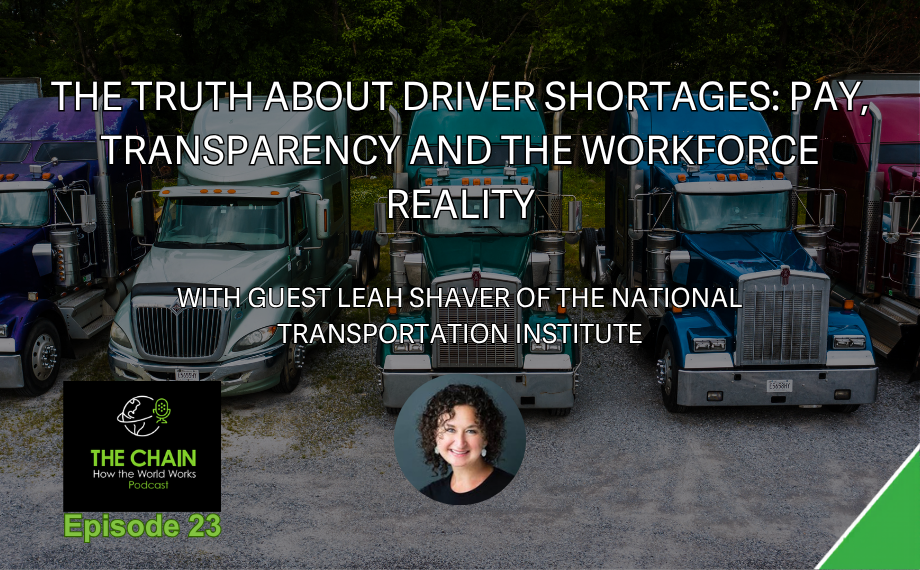
The heart of the transportation and logistics industry is the truck driver. Without them, maintaining the steady flow of global supply chains would be nearly impossible. So, why is such a necessary workforce facing an 82,000-talent gap in 2026, according to the American Trucking Association? In this episode of The Chain podcast, Leah Shaver, president and CEO of the National Transportation Institute (NTI), breaks down the reality behind the truck driver shortage, compensation complexity and long-term workforce sustainability.
Key takeaways
The truck driver shortage is actually a retention and job design problem
High turnover, job dissatisfaction and misaligned expectations between what drivers are promised and what they experience drive consistent churn. Without addressing job design and retention, the industry will continue to face recurring workforce shortages.
Compensation combined with upskilling, reskilling and transparency provides a path forward
Truck driver pay can be competitive, even reaching six figures, but that doesn’t guarantee retention. The structure of pay, especially productivity-based models and inconsistent schedules, often creates frustration and unpredictability. True competitiveness comes from aligning pay, transparency and job experience — not just increasing wages.
The trucking industry must evolve to attract the next generation
As aging truck drivers near retirement, the industry must adapt to attract younger employees and underrepresented groups. Rethinking career paths, offering flexibility and improving early-career experiences are critical to building a sustainable pipeline.
Why driver supply is a cycle, not a one-time crisis
The trucking industry operates in cycles of supply and demand. At times, there appears to be a surplus of drivers; while at other times, companies scramble to meet demand.
As Shaver explains, these cycles often lead companies to stop investing in workforce development during quieter periods — only to face severe shortages when demand rebounds. The real issue isn’t just supply, but a lack of long-term workforce planning. Organizations that fail to continuously invest in talent pipelines, training and retention strategies will remain stuck in a reactive cycle.
Companies can attract and keep more highly skilled drivers through upskilling and reskilling solutions. Programs such as sponsored commercial driver’s license trainings and mentor programs allow businesses to demonstrate their commitment to their workforce.
Misalignment between job promise and reality
One of the biggest reasons for turnover is the gap between what drivers expect and what they actually experience on the job. Compensation structures are often complex, with productivity-based pay models that depend on factors outside of a driver’s control. For example, many drivers are paid based on how many miles they drive. At the same time, inconsistent schedules and fluctuating earnings create uncertainty, making it difficult for drivers to maintain a predictable routine.
This misalignment leads to early tenure dissatisfaction, which fuels churn and increases recruiting costs across the industry. Transparency and clearer communication are critical to rebuilding trust and improving retention. Trucking companies can leverage the latest technology, such as trucking management systems that provide drivers with real-time updates on schedules and load assignments.
How to close the truck driver shortage gap
Shaver emphasizes the need to expand access to opportunity — particularly for women, caregivers and younger workers — by offering more flexible schedules, better early-career roles and clearer advancement pathways.
The trucking industry needs to redesign career paths. Instead of forcing new entrants into the most demanding roles with the lowest flexibility, organizations should create structured career paths that allow employees to grow across different functions. This shift not only improves retention but also builds a more resilient and sustainable workforce for the future.
Build a more resilient truck driver workforce pipeline
Misaligned job expectations and outdated labor models simply scratch the surface. Shaver demonstrates why solving the trucker driver shortage problem requires more than just higher pay — it requires a complete rethink of workforce strategy.
Learn more about the challenges the logistics industry faces and how ASCM offers workforce development solutions that optimize team skills and increase retention.
The truth about the truck driver shortage FAQs
Is there a truck driver shortage?
Yes, according to research reports from associations like the American Trucking Association, the trucking industry has faced a growing talent shortage since 2022.
Why is there a truck driver shortage?
According to trucking expert Leah Shaver, the truck driver shortage stems from uncompetitive compensation, confusing pay models, lack of communication and transparency, inconsistent schedules, an aging workforce, and inability to transform the workforce to align with the next generation of drivers’ work-life balance.
How to fix the truck driver shortage?
The National Transportation Institute's CEO advises trucking companies to build a sustainable workforce pipeline by redesigning career pathways, offering more flexibility and communicating true transparency about schedules and pay.
