

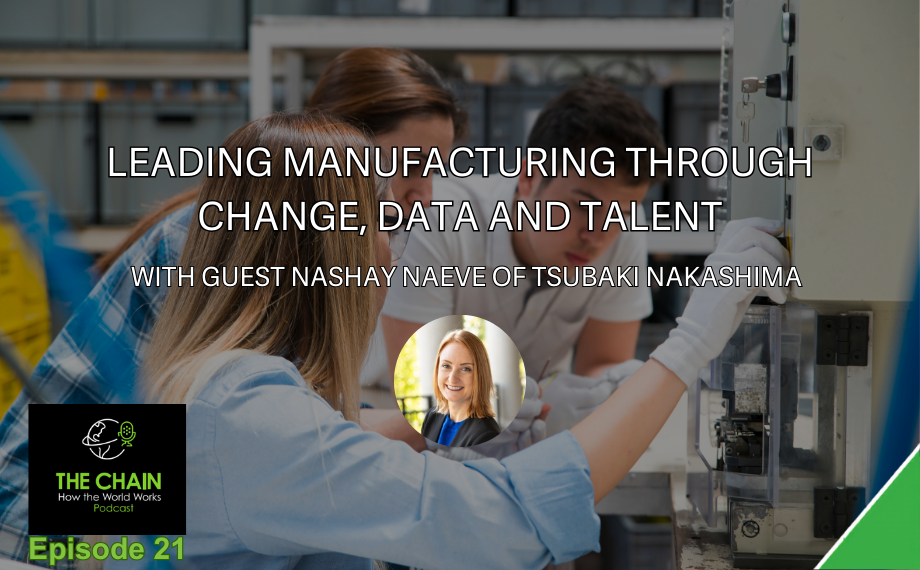
Expert Insights on Leading Global Manufacturing Landscape.
Supply chain manufacturing jobs are predicted to climb to 3.8 million by 2033. However, 1.9 million could go unfilled, according to the National Association of Manufacturers. Manufacturing supply chain leaders need plan how to fill these vacant positions while navigating global disruptions, rapid technology advancements and sustainability initiatives.
Nahsay Naeve, president of the Engineered Plastic Components Business Unit at Tsubaki Nakashima, joins The Chain podcast to share her inspiring journey, from global business management to her current role overseeing precision industrial components. This episode offers invaluable perspectives for supply chain professionals looking to advance their careers and organizations aiming to adapt to the ever-changing landscape of manufacturing.
Key takeaways from the episode
Effective manufacturing supply chain leadership is built on diverse experiences and flexible management styles that empower teams to make fast, informed decisions. For our podcast guest, building resilient manufacturing teams of the future means closing the skills gap, improving productivity through technology and making sustainability initiatives part of the core business strategy.
Workforce development through technology in manufacturing supply chain
For Naeve, manufacturing leaders can invest in upskilling and reskilling their workforce by starting with small wins. For instance, automation of manual tasks helps close skills gaps as technology is adopted. And a focus on adopting digital fluency in each team. However, technology investments improve productivity only when paired with clear measurements such as scrap rates and annual productivity, as well as leadership’s openness to revisiting older ideas as tools evolve.
Sustainability as a strategic differentiator
Sustainability is evolving from a compliance requirement to a strategic initiative within the manufacturing supply chain. Naeve outlines three value drivers: regulation, OEM requirements and end-customer demand. Being a first mover or excelling in sustainable practices, including using recyclable and recycled plastics, especially in Europe, creates opportunities for differentiation and added value in the supply chain.
Career advice for manufacturing supply chain professionals
Naeve encourages supply chain professionals to familiarize themselves with digital tools, understand the end-to-end supply chain and develop adaptable mindsets. She also highlights crisis management skills as essential for responding to unpredictable supply chain disruptions. For women entering the industry, mentorship and organizational culture are key factors for success and advancement in leadership roles.
Apply these manufacturing leadership takeaways in your organization
Naeve’s insights point to a practical playbook for manufacturing supply chain leaders: Start building capability with targeted, measurable technology, embed sustainability into core operating decisions to differentiate with customers and regulators, and develop people who can see the end-to-end system and lead through disruption. Prioritizing upskilling and investing in mentorship and adaptable mindsets will help teams close talent gaps while staying competitive in an environment defined by rapid change.
Give your organization a competitive edge and transform your talent ecosystem.
