
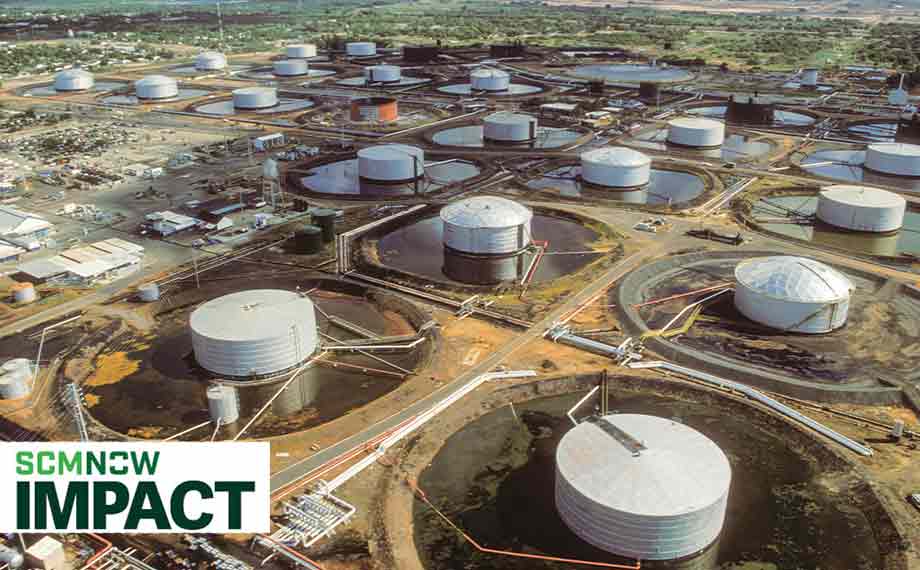
Despite the push in recent decades for sustainable solutions to the global energy crisis — whether via wind farms, electric vehicles or even fusion energy — gasoline still powers much of the world. The global hunt for oil is a volatile, zero-sum game that often collapses into regional and political conflicts. The turmoil continued this week with the capture of Nicolás Maduro, president of oil-rich and resource-scarce Venezuela, and President Trump's pledge to run the country and increase oil output.
“With an estimated 303 billion barrels, Venezuela is home to the world's largest proven oil reserves,” reports the BBC. However, the broadcaster notes that “the amount of oil the country actually produces today is tiny by comparison,” largely because former leaders “tightened control over the state-run oil company, leading to an exodus of more experienced staff.” Although Chevron and other Western oil companies are still active in the country, operations have decreased considerably: “In November, Venezuela produced an estimated 860,000 barrels per day… barely a third of what it was 10 years ago and accounting for less than 1% of world oil consumption.”
Restoring production to historical peaks will likely take years and billions of dollars in investment, a risk some companies may be unwilling to take. In fact, ConocoPhillips and ExxonMobil are still seeking billions in compensation from Venezuela after their assets were expropriated in the 2000s. Even if they are willing to return, the operational barriers would be onerous: “Discussions about Venezuela’s potential return to global oil markets often focus on reserves, production targets or price implications.
“From a supply chain perspective, those elements are secondary,” Logistics Viewpoints argues, noting that infrastructure has deteriorated and supplier networks have disappeared. Equally critical is a specialized workforce equipped with skilled labor and institutional knowledge. The energy talent pool in Venezuela has diminished significantly over the years, requiring comprehensive upskilling and recruitment to fill the gaps. Essentially, sustained production depends on restoring continuity across upstream operating inputs, industrial equipment and materials, and physical infrastructure.
But there is some reason for hope. A successful rehabilitation could prove “seismic” for our industry, Supply Chain Digital predicts. “If political transition holds and infrastructure repairs begin, the nation could rapidly re-integrate into global trade flows, reshaping freight routes and refinery operations.”
Stay in the loop
A foreign government takeover may be an outlier, but constant disruption is a fundamental reality for every global supply chain. Keep up with all of the latest supply chain happenings with ASCM’s Supply Chain Signals. The free newsletter provides a consolidated, scannable update on topics and trends that will help you navigate market volatility. Recent editions included tips to outmaneuver unexpected supply chain disruptions, announcements in emerging technology and shifting global regulations, and strategies and tactics for optimizing procurement. Sign up today for a quick, informative read every week.