As the World Economic Forum concludes its annual meeting in Davos, one thing is clear: AI has saturated the global conversation. From the halls of the Swiss Alps to the front lines of global logistics, the value of this technology lies not in its raw power, but its strategic purpose.
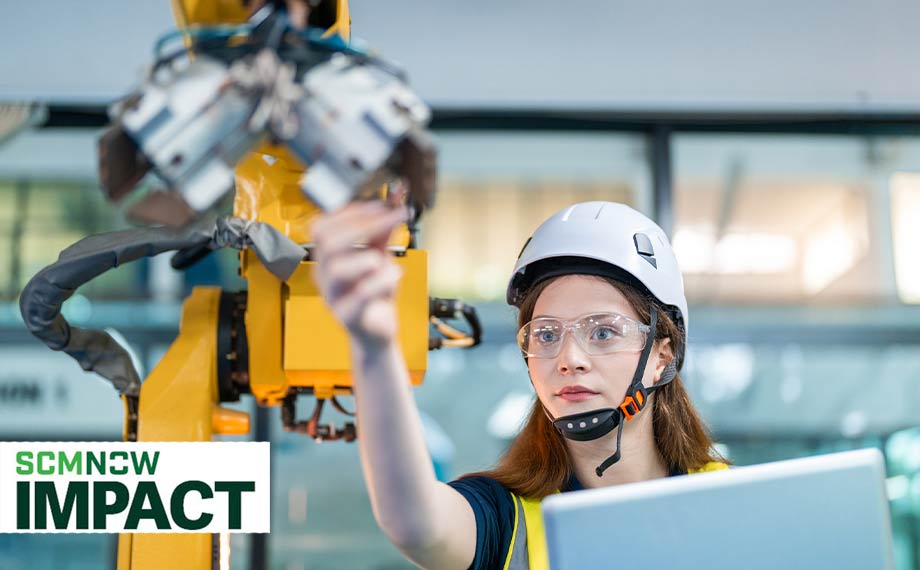
Supply chain professionals must shift their perspective — recognizing that AI is no longer a mere technical utility; rather, it must be a thinking asset. This evolution defines the concept of physical AI: By embedding intelligence into machinery, supply chain assets gain the ability to perceive and adapt to environments that more often than not are, as the WEF describes, “messy, dynamic and imperfect.”
Physical AI can also connect to other networks, learn from human training and refinement, and provide critical insights needed for predictive resilience. In other words, “Instead of reacting to failures, physical AI predicts them,” WEF continues. For example, AI recognizes patterns to help predict when goods should be replenished to prevent empty shelves.
“As global operations face rising volatility, from climate shocks to geopolitical uncertainty, the next competitive differentiator will be systems that not only diagnose issues, but resolve them autonomously,” Forbes explains. “Self-correcting supply chains mark a shift from reactive analytics to proactive adaptation — AI that can detect disruption, adjust parameters, prioritize products or shipments, and reoptimize flows within guardrails defined by human judgment.”
Still, scaling these technologies presents a unique challenge for the modern supply chain leader. During a TIME100 Talks Davos panel, executives from Dow, Ernst & Young and NTT DATA emphasized that, while discovery and productivity gains are enormous, the transition is complex. Strategic professionals will move their teams from being "doers of tasks to directors of systems."
To achieve this, consider the following tips from industry experts:
- Invest in high-quality data and strong feedback loops. Establish a data-layer foundation to ensure you have a single source of truth and AI is learning from reality, not noise.
- Audit for high-impact use cases by identifying specific operational gaps — such as touchless forecasting or warehouse orchestration — where AI can solve a real problem.
- To avoid “pilot purgatory,” where 95% of AI projects fail, train robots to match human speed and strength while upskilling workers to manage their digital teammates.
- Crosstrain individuals to understand key topics and goals in different functions. Along the way, build organizationwide trust, so AI decisions are shared and transparent.
Future-ready talent
Any AI initiative must be viewed as a continuous partnership between systems and people. After all, human expertise is the catalyst that turns any technology from a tool into a real asset. Tap ASCM’s Supply Chain Technology Certificate to unlock essential capabilities in AI, as well as analytics, blockchain, additive manufacturing, cybersecurity and more. Whether you’re empowering your team with this innovative credential or pursuing it yourself to become a high-level decision-maker, this is your path to leading the future of supply chain.