
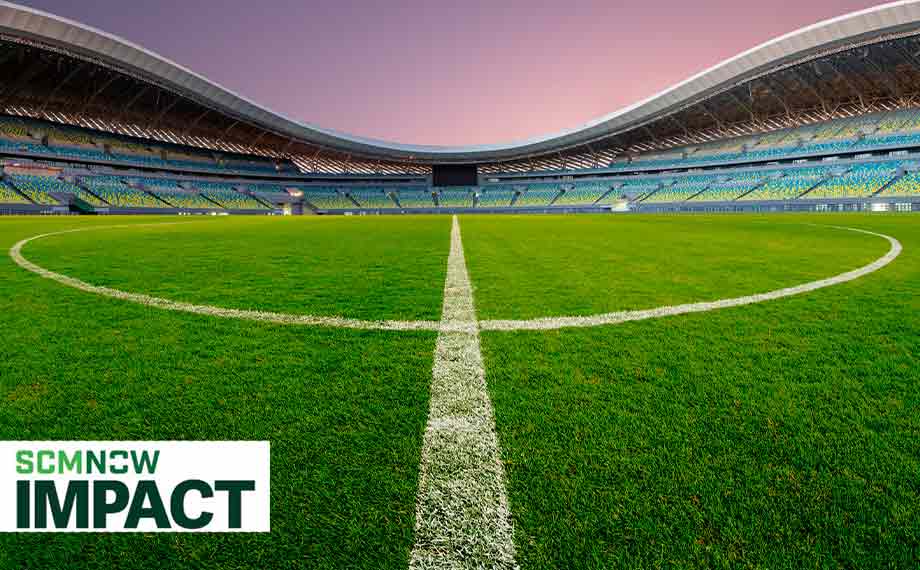
The 2026 FIFA World Cup has officially arrived, bringing billions of people together to cheer their home countries on the world stage. Yet, for supply chain professionals, the true spectacle of this North American tournament isn't just the athletic feats; it's the massive logistical triumph required to pull it off.
For fans lucky enough to attend the World Cup — whether in a Canadian, Mexican or U.S. city — the experience is inherently distinct and localized. But for the athletes, how it feels to run, pivot and kick the ball must be consistent, predictable and reliable everywhere. This all starts with the pitch.
FIFA requires a grass surface. However, many of the stadiums being used for the matches normally host NFL football — on artificial turf. The solution? Build a new pitch right on top. Of course, the process is extremely complicated, as Reuters explains: “The perfect football pitch at the 2026 World Cup is not simply grass. It is a combination of agriculture, temperature control, engineering and logistics.” Much like manufacturing basketballs for the NCAA or footballs for the NFL, explored in the sports episode of ASCM’s docuseries, The Chain, growing grass for the World Cup requires a complicated supply chain that goes largely unnoticed by fans.
For “cool season” stadiums and those with domes, Kentucky Bluegrass is the ideal playing surface, per The Wall Street Journal. But between American football games, pop concerts and local rodeos, there’s no time to grow it from seed. Building standardization into a living product requires incredibly intricate planning. In fact, the grass takes seven years to grow to the level required for a soccer pitch. Plus, it needs water, oxygen and massive amounts of light — resources in short supply in a dome. So, the sod is grown offsite, with many of the pitches traveling thousands of miles before the actual kickoff.
This is where the cold chain comes in, with sod shipped in refrigeration trucks requiring dozens of drivers to keep things moving around the clock. Additionally, the infrastructure at the arenas must be prepared in advance so the grass can be laid down right away. The pitch itself is like a “layer cake” on top of the artificial turf. It starts with a gravel or plastic base layer to prevent flooding; then, a layer of sand is added for roots to breathe. Finally, the playing surface can be rolled on top.
Stay in the game with professional development
Whether your particular industry is sports or semiconductors, retail or rail, getting the product to the customer on time is the name of the game. That’s why investing in professional development is crucial for a successful career. Get Certified in Logistics, Transportation and Distribution to meet any challenge head-on. This globally recognized certification delivers comprehensive mastery across the full logistics spectrum, from planning and sourcing to last-mile delivery and reverse logistics, giving you the tools to perform at the highest level and advance your career. Plus, right now you can save 15% off the purchase price with promo code SUMMER2026. Sign up today and secure a win for your team — and yourself!