
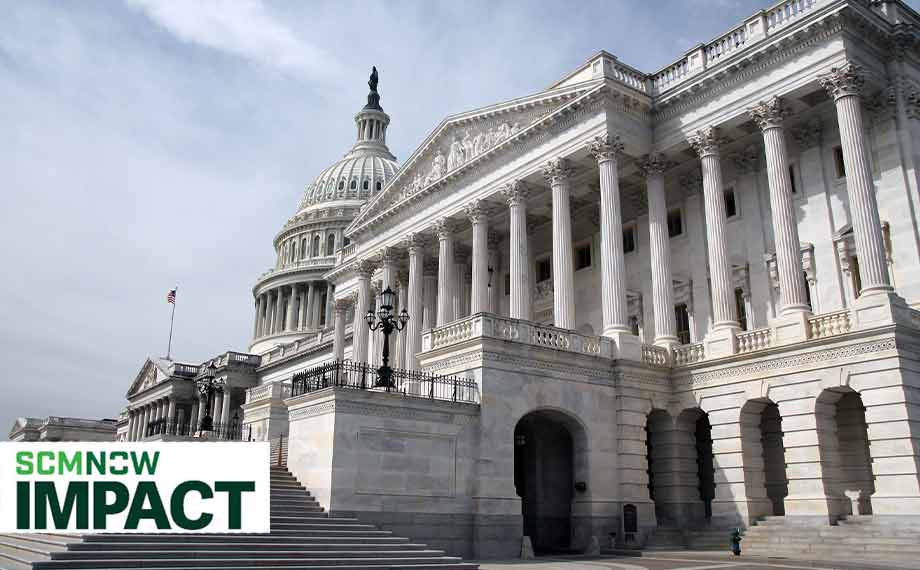
For the second time this year, the U.S. government has shut down, following another failure by Congress to pass a federal budget. This latest political gridlock is set to furlough hundreds of thousands of federal employees and force many others to work without pay. However, the ripple effects will be felt far beyond Washington and are likely to create significant disruption across America's supply chains.
First, air travel is about to get more difficult. While air traffic controllers and Transportation Security Administration (TSA) employees are considered essential and must report to work, NPR notes that some called out sick during past shutdowns when forced to work without pay. And as Logistics Viewpoints reports, the 2018-19 shutdown saw TSA staff shortages lead to longer lines and delays, affecting both passenger and cargo transport.
Transportation on land will also face significant challenges. Truckers can continue hauling freight as usual, but permitting, compliance reviews and background checks for drivers are paused, which will delay the hiring and training of new truckers indefinitely. This of course worsens the nation’s persistent driver shortage.
Railroads will continue to run, but border crossings between the United States and Mexico may be strained, with fewer officers and Customs and Border Protection workers. Inspections and paperwork processing for shipments will be hindered, potentially leading to backlogs at key entry points.
Meanwhile, slowdowns at ports will lead to longer wait times, a shortage of chassis and containers, and higher last-mile costs, notes Supply Chain Digital. Plus, distributed networks become more difficult to schedule, raising friction and decreasing Americans’ trust in the reliability of its hardworking logistics systems. During the last shutdown, dwell times at the Port of Los Angeles-Long Beach rose 15-20%, putting shipments of perishables at particular risk.
All of this comes on the heels of yet another round of tariff announcements, which are expected to worsen an already struggling manufacturing industry. The timing is especially difficult, as this coincides with Manufacturing Day 2025 — a nationwide initiative that aims to inspire interest in the industry while highlighting the potential of modern manufacturing careers. Ultimately, these compounded disruptions highlight a critical vulnerability within the sector, proving a profound need for a more strategic approach.
A plan for our uncertain future
Supply chain interruptions must be expected and prepared for. This begins with a strong supply chain strategy. ASCM’s revolutionary Certified in Transformation for Supply Chain (CTSC) program will help you and your team build critical skills in systems thinking, digital fluency and analytical methods for all types of supply chains. You'll learn to identify risks and opportunities, as well as the right frameworks, models and approaches to effect transformation. Sign up today, and know that when the next disruption hits, you’ll be ready.