
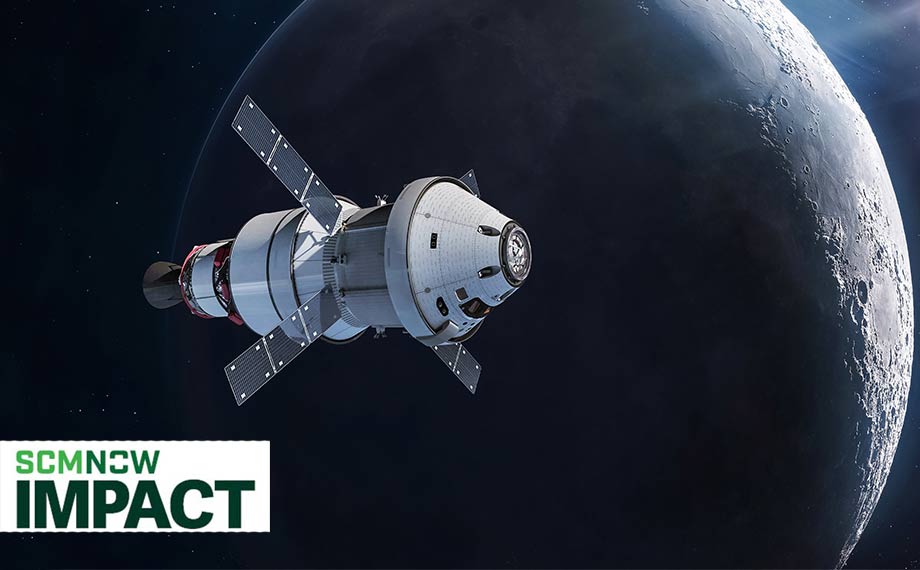
Forget “one small step” — Artemis II is a giant leap made up of thousands and thousands of steps, each painstakingly orchestrated. And while the world watches the astronauts make history, those of us in supply chain know the real magic is happening behind the scenes, with dedicated partners synchronizing one of the most complex handoffs in history.
In fact, the mission leveraged the expertise and labor of more than 2,700 suppliers — a vast network of international partners working together toward top-tier standardization and visibility. “One of Artemis’s most critical tools is its digital thread,” Forbes reports. “This is a continuous record that links design, engineering, manufacturing, testing and integration. Every component has a documented history, and every change is tracked and verified. This level of visibility ensures that ... decisions happen faster and problems can be pinpointed and resolved quickly.”
Contributors to this impressive supply chain include the following:
- Lockheed Martin managed the advanced propulsion systems, avionics, ground testing and precision docking capabilities.
- Northrop Grumman supplied critical safety systems, including the launch abort and attitude control motors.
- The high-pressure helium tanks for Orion's flotation system were produced by Aerojet Rocketdyne.
- Constellium manufactured the “tip-to-tail" aluminum, which took more than 20 years of research and development to perfect.
- The astronaut’s bespoke spacesuits came from David Clark Company and are designed to sustain life for up to six days.
- Rayotek provided the glass for the windows, which are several layers thick to protect against micrometeoroids, bacteria and mold.
- Seventeen unique switch controls were manufactured by Otto Engineering, which, coincidentally, was founded in 1961 — the same year the first human went into space.
Today, space travel is advancing so rapidly that it’s actually starting to strain global networks. “Many suppliers were originally structured around low-volume, high-cost government programs with long development timelines. The current market demands faster production and much higher output,” per Space News. However, government demand is notoriously unreliable, and many suppliers hesitate to increase inventory without clear, long-term viability. Along with persistent workforce shortages and rigorous testing requirements, extremely long lead times are inevitable. As the gap between government standards and commercial speed continues to widen, the industry’s resilience will depend on leaders who can synchronize these conflicting demands with precision.
From mission control to career control
While few of us will ever manage a lunar payload, the core principles of synchronization and traceability are exactly what define high-performing supply chains here on Earth. Indeed, the success of Artemis II reminds us that the most valuable assets in any network are the supply chain professionals who make it all possible. Elevate your own expertise by earning the Certified in Logistics, Transportation and Distribution (CLTD) credential. You’ll learn how to fully integrate macro and micro logistics, conduct capacity planning, orchestrate order management, and much more. Sign up today — the next giant leap in your career starts now.