
The women in supply chain management are a cornerstone of operational excellence. After all, organizational maturity hinges on the ability to integrate varied perspectives and frameworks into decision-making and technical orchestration. To ensure a wider range of expertise, it’s vital to place diversity efforts at your organization’s core. Several recent studies confirm this strategic imperative:
- The 2025 Gartner Women in Supply Chain Survey shows enhanced performance metrics are a direct result of the explicit inclusion of gender diversity goals on management scorecards. Further, successful organizations report significantly higher employee engagement and lower attrition in middle management.
- As AI becomes ever more critical, the McKinsey & Company report Women in the Workplace 2024 notes the importance of AI adoption parity. Gender-diverse leadership ensures more equitable support; without it, men currently receive more encouragement to use agentic AI, potentially creating a new digital divide in entry-level planning roles.
- According to the DHL Group 2024 Progress Report, diverse management teams are more effective at integrating environmental, social and governance KPIs into daily operations, aligning decarbonization targets with fundamental business outcomes such as cost optimization.
- These efforts to achieve a stable, future-proof network are further supported by cognitive diversity in transformation, with MIT Center for Transportation & Logistics 2024 Analysis showing women leaders to be transformation catalysts, particularly in redesigning supply chains for net-zero goals.
The state of women in supply chain
While entry-level representation is reaching historic highs, a significant drop-off persists at the director and vice president levels. This “middle-management squeeze” prevents organizations from fully leveraging the risk-mitigation and collaborative problem-solving skills that diverse teams naturally bring to complex global logistics.
Persistent barriers often include a lack of sponsorship, rather than a lack of mentorship. Additionally, the tendency to overlook quiet contributors in favor of those who engage in traditional, high-volume self-promotion can inadvertently stall the advancement of highly competent female professionals. Following are some specific examples from key industry sectors:
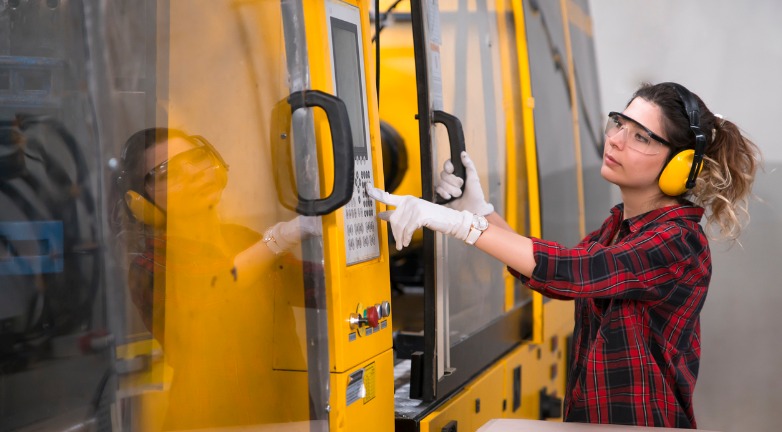
Women in manufacturing: Despite progress, women in this sector often face gendered perceptions of technical aptitude, which can result in being overlooked for high-level engineering or shop-floor management roles. However, the shift toward Industry 5.0 — which prioritizes human-centric collaboration alongside automation — is opening many new doors. Women are increasingly spearheading lean initiatives and shop-floor digital transformations, proving that a balanced workforce leads to safer environments and higher production yields.
Women in CPG: A persistent challenge in the consumer packaged goods space is the lack of representation in procurement and global sourcing roles. Even so, companies with gender-diverse supply chain leadership are better positioned to respond to rapidly shifting consumer sentiments regarding sustainability. These organizations often excel at last-mile innovation and circular economy modeling, directly linking diversity to improved market responsiveness and brand loyalty.
Women in trucking: The transportation industry struggles with workplace safety and a lack of inclusive infrastructure, from inadequate roadside facilities to hostile environments, which can deter female talent. While the driver's seat remains male-dominated, women are rapidly taking the wheel in transportation management and fleet optimization. By applying data-driven approaches to route planning and fuel efficiency, female logistics managers are helping the industry tackle its most persistent overhead challenges and labor shortages.
Women in retail: Women in retail often encounter a glass ceiling at the executive level, where they are highly represented in store operations but significantly less so in the logistics and distribution leadership that drives the back end. Retail supply chains face the unique pressure of omnichannel complexity, an area where women can excel at managing the intersection of customer experience and inventory precision. Female executives in this space are frequently at the forefront of integrating AI-driven demand forecasting with traditional replenishment cycles.
What senior leadership can do
To achieve true technical and operational integration, leaders must implement structural changes that safeguard career trajectories and ensure technological equity. Following are actionable strategies to empower the women in your supply chain organization:
First, achieving parity requires a deliberate mapping of technical and leadership development paths. When career pathways are transparent and meritocratic, women are more likely to seek out the types of high-visibility roles that are traditional steppingstones to the C-suite.
Next, normalize diverse management scorecards. Move gender diversity from a passive HR initiative to an active operational KPI. By embedding specific diversity and inclusion targets directly into executive and middle-management performance reviews — rather than keeping them as siloed social goals — you create a direct accountability loop that correlates with the enhanced performance metrics and lower attrition rates seen in the Gartner research.
It’s also essential to audit for AI adoption parity. Proactively monitor the deployment of agentic AI and advanced planning tools across your workforce to prevent a digital divide. Establish formal training cohorts that ensure women in entry-level and middle management roles receive equal encouragement and resources to master autonomous orchestration tools, keeping leadership pipelines technically robust and equitable.
The historically “always-on” nature of the supply chain work environment can conflict with the need for flexible arrangements, often disproportionately affecting women. Organizations that adopt asynchronous communication and flexible scheduling see a marked improvement in the retention of their top female talent.
Internalized pressure to be perfect rather than agile can lead to imposter syndrome and confidence gaps, where qualified women may hesitate to apply for roles unless they meet 100% of the criteria. Addressing this through organizational culture changes encourages a growth mindset where technical experimentation and leadership potential are valued over static checkboxes.
Finally, institutionalize sponsorship. Create formal programs specifically designed to counteract the self-selection bias often found in high-stakes global trade and technology roles. By connecting high-potential female professionals with senior mentors who can guide them through complex transformations — from Scope 3 initiatives to harmonized tariff schedule reclassifications — you cultivate a loyal, expert workforce prepared to lead the organization's most critical technical functions.
Support women with professional development
ASCM provides a suite of resources designed to help the women in your organization bridge the gap between individual potential and organizational excellence. Take the next step in empowering your workforce or advancing your own career:
ASCM Mentor Program: Woman at all levels of their supply chain careers can connect with a global network to share ideas and build the cross-functional relationships essential for leadership. Access this community in the ASCM Supply Chain Knowledge Center.
Career resources: Help the women at your company stay ahead of the digital divide with expert advice, white papers and webinars for mastery of the latest tools and advancement into senior orchestration roles.
ASCM Awards of Excellence: Ensure your female supply chain leaders get the recognition they deserve. Whether you are nominating a Supply Chain Performance Champion driving transformation via SCOR DS or a Sustainability Champion integrating enterprise standards, these awards elevate those making a positive impact. There is no cost to enter — apply today to join an exclusive community of forward-thinking professionals.
Unlock your organization's full leadership potential
The transition to a more resilient and technologically advanced supply chain is inseparable from the women who lead it. Use these strategies and the ASCM resources to ensure a leadership architecture that values diverse expertise as much as technical precision — thus creating a culture in which the next generation of female supply chain experts can truly thrive.