Warehouse management encompasses the processes involved in running the day-to-day operations of a warehouse, including receiving, storing, picking, packing and shipping goods. Here, we’ll explain the details and systems involved in warehouse management and the important role they play in supply chain success.
Accurate tracking of inventory, secure and safe storage of products, and timely order fulfillment are all critical component of the warehouse management process and what make a supply chain truly successful. Within that process, data is collected and maintained through a warehouse management system (WMS). According to the ASCM Supply Chain Dictionary, WMS is a computer application system designed to manage and optimize workflows and the storage of goods within a warehouse. It often interfaces with the automated data capture and enterprise resource planning systems.

While warehouse management is mostly invisible to the customers, it plays a vital behind-the-scenes role in delivering quality products in good condition and on time. Proper warehouse management ensures adequate storage space for inventory, protecting the quality of the goods and enabling efficient retrieval for timely order fulfillment. It requires accurate tracking and well-coordinated communication efforts and when executed successfully, contributes greatly to overall customer satisfaction.

Robust and well-run warehouse management offers many benefits that ripple throughout the supply chain and include:
The warehouse management process typically begins with the receipt of goods, which are checked for accuracy before being placed in predesignated storage locations. Warehouse software carefully tracks the exact location of each item for efficient, timely retrieval. When an order is received, the warehouse management system guides workers through the picking process and manages the packing, shipping, route optimization and transportation scheduling to ensure timely delivery.
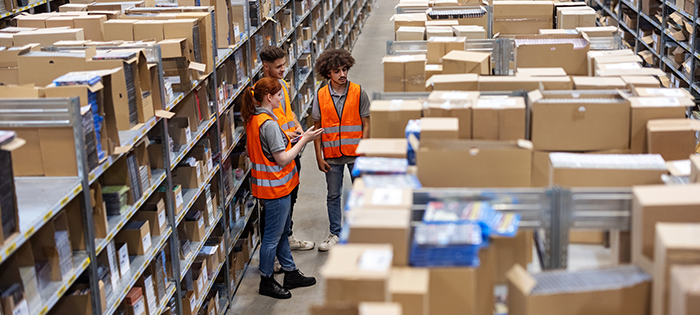
The specific elements of the warehouse management processes are:
Goods arrive at the warehouse, are inspected, scanned and entered into the warehouse management system.
The WMS determines the optimal storage spot for each item and guides workers to the designated locations, confirming the assigned location into inventory records.
Environmental controls, such as temperature and humidity are properly programs to maintain product quality.
Once orders are received, they are prioritized according to delivery dates and shipping methods so warehouse workers can efficiently collect the correct items in an organized manner.
Before packing, the picked items are checked against the orders for accuracy, then securely packed for shipment with all necessary shipping labels and documentation.
Packed orders are moved to the shipping area where they are grouped by carrier and destination, loaded onto transportation vehicles. All tracking information is entered into the WMS.
The idea behind the first generation warehouse management system (WHS) began with J.C. Penny in 1975 with three simple goals: identify what inventory you have, where it is stored and how much of it can be sold. The implementation of this system went on to change the entire world of supply chain management.
Today’s warehouse management systems have developed into sophisticated software that help companies manage and control daily warehouse operations from the moment goods and materials enter a distribution or fulfillment center until the moment they leave.
A good WMS helps streamline every facet of warehouse management and integrates tools including bar code scanning and RFID labeling, advanced robotics and augmented reality (AR) wearables and other mission-critical solutions, such as transportation management systems (TMS), enterprise resource planning (ERP) and logistics software.
And because warehouse management provides process efficiencies and accurate storage data, it supports green logistics through reduction of waste and energy, which can lead to considerable cost savings for your company.
Integrating a WMS into your supply chain will improve your company’s productivity and customer satisfaction, however, it does involve some preliminary preparation and training.
The phases of WMS integration include:
Once products leave the warehouse management process through order fulfillment and distribution, the inventory management system is updated to accurately reflect the location and quantity of product within the supply chain. At that point, stock is replenished as needed to ensure proper inventory levels.

The following links provide more in-depth information on other supply chain topics:
Subscribe today and you’ll receive valuable supply chain insights from the top leaders in the industry that will help you do your job better, faster, and more efficiently. From industry news to insider tips and trends, Signals delivers a quick read on the latest information on supply chain management right to your inbox.