Supply chains are evolving rapidly, driven by global trade, e-commerce growth, and technological innovation. These forces are reshaping how goods are made and where they’re sourced from, how businesses operate, and what skills are needed to thrive. With projected job growth, staying competitive means more than keeping pace — it means continuously expanding your expertise.
Success in supply chain today requires a strategic, adaptable skillset that grows with the industry. The APICS CPIM certification supports your commitment to continuous learning, helping you sharpen your skills, stay relevant, and position yourself for long-term career growth.

The APICS Certified Supply Chain Professional (CPIM) credential is one of four industry-recognized certifications developed by ASCM — the global leader in supply chain education.
CPIM equips professionals with strategic insight and practical skills to manage internal operations to drive organizational improvement, manage inventory levels, and create production schedules. With this globally respected credential, you'll be prepared to lead with confidence and drive meaningful results across the supply chain.
Whether you're advancing in your current role or preparing for your next career move, CPIM helps you stand out, lead with confidence, and earn more.

If you work in or aspire to roles like:

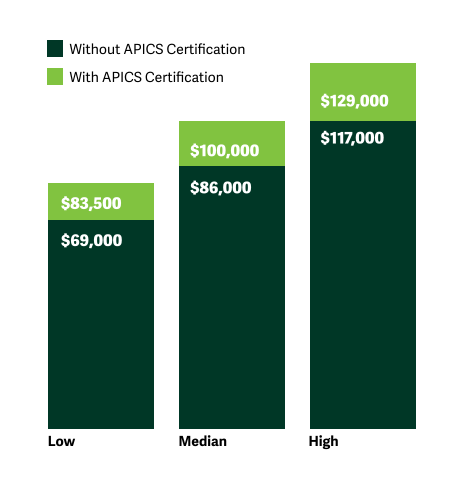
According to the 2025 ASCM Supply Chain Salary and Career Report, CPIM-certified professionals earn an average of $100,000, compared to $86,000 for those without the credential, a significant salary boost that reflects the value of specialized training.
2025 ASCM Supply Chain Salary and Career Report
Discover how APICS certification can increase your earning potential by 20%.
20%
Higher salary with CPIM
127,549
CPIM certified professionals since 2006
100+
Countries with APICS-certified professionals.
Fill out the form to download your free copy of the 2025 ASCM Supply Chain Salary and Career Report and discover how the CPIM certification can elevate your career.
Inside the report:
Get the data you need to make informed, strategic decisions about your future in supply chain.